We use affiliate links to run our site. When you buy through links on our site, we may earn an affiliate commission, without any added cost to you. Learn more
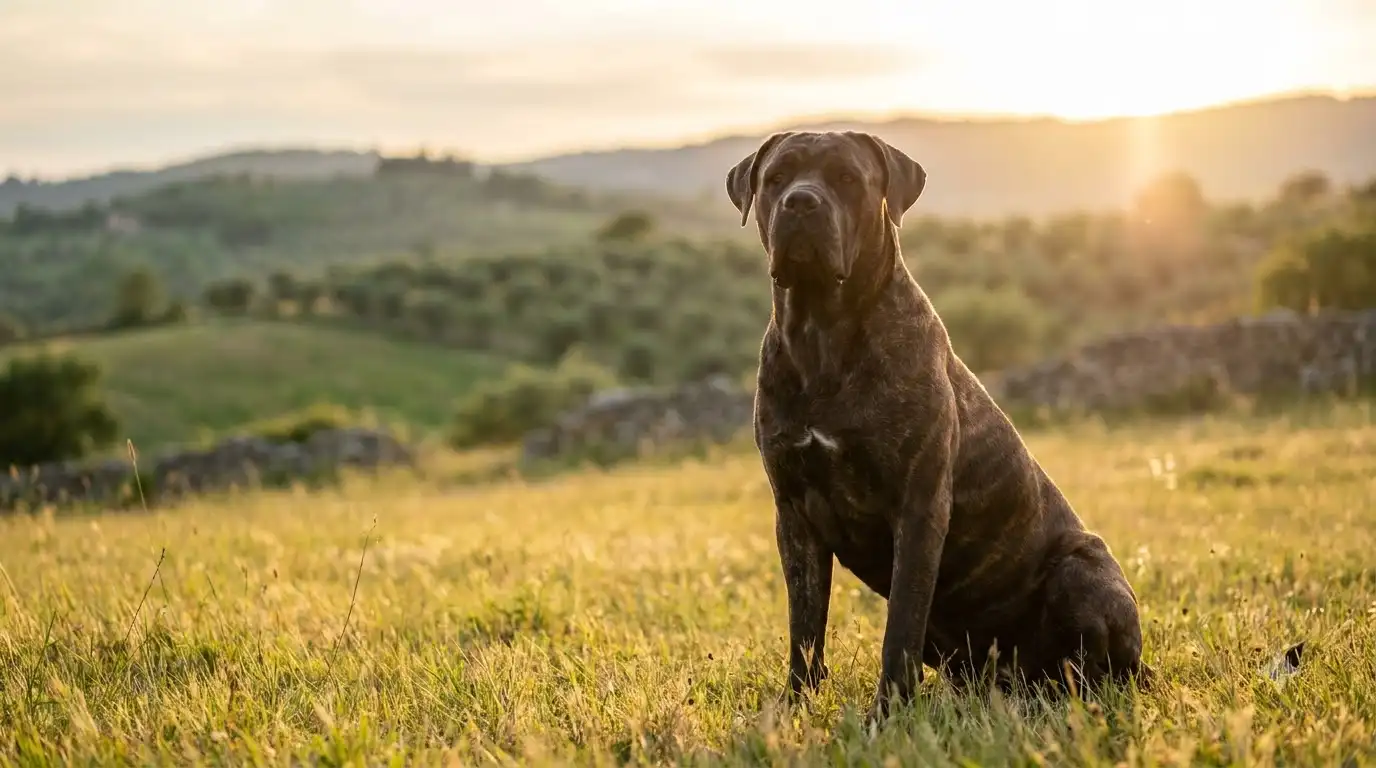
The photos don’t lie. A muscular frame, dark, unreadable eyes, a presence that fills a doorway. The Cane Corso looks every bit the guardian, and most people stop right there—big dog, fierce reputation, end of story.
But that surface read misses almost everything worth knowing. After years around these dogs, I can tell you the breed’s real story is stranger and more interesting than the guard-dog label suggests. Below are ten things about the Cane Corso that rarely make it into breed guides.
The Ancient Roman Heritage
Strip away the muscle, and you’ll find a dog with a résumé few breeds can match. The Corso’s ancestors marched alongside Roman legions. Molossian war dogs, bred for battle, their courage written into the historical record of the ancient world.

Then something curious happened. The battlefield disappeared from the job description, and the dogs went to work on Italian farms instead—hunting, herding, guarding property, whatever the day demanded.
That shift from warrior to all-purpose farmhand shaped the animal we know today: a dog with a soldier’s courage and a worker’s practicality, able to switch between the two without missing a beat.
Not Just a Guard Dog: The Versatile Working Background
The Wild Boar Hunter
Consider what it takes to hunt wild boar. Two hundred pounds of muscle, tusks, and terrible temper, capable of gutting a dog with a single swipe. Italian hunters needed an animal willing to face that head-on, and the Cane Corso was the answer.
The build tells the story. That heavy neck and powerful jaw aren’t cosmetic. They’re tools, refined over centuries for gripping and holding large, dangerous prey. Even now, long after most Corsos left the hunting field, the attitude remains: a Corso does not back down.
The Cattle Driver
Guarding was only part of the job. These same dogs moved cattle to market, a task demanding strength plus something more—judgment. A dog driving livestock through the countryside had to read situations, make decisions, and work a problem without a handler standing over him.
That independence explains a lot about the modern Corso. When your dog figures out how to open the back door or invents a new game at six in the morning, he’s drawing on centuries of being expected to think for himself.
The Farm Guardian

And then there was everything else. Wolves threatening the flock at night. Strangers approaching the farmhouse. Children wandering toward the road. One dog handled all of it, shifting between roles as the day required.
Owners today still see this flexibility. A Corso can sprawl across the living room floor, apparently asleep, and be standing at full alert two seconds later because something outside struck him as wrong. That’s not nerves. That’s heritage.
Unique Physical Characteristics You Won’t Find in the Breed Standard
The Rare “Blue” Coat Myth
That striking blue-gray coat isn’t a separate color at all. It’s black, diluted—a genetic mutation that also lightens the eyes and nose, which is why blue Corsos so often have those pale, piercing stares.
There’s a catch, though. The same dilution gene is linked to Color Dilution Alopecia, a condition that can cause skin problems and hair loss. Blue Corsos are undeniably beautiful. They may also need more skin care than their black or fawn relatives, and anyone considering one should know that going in.
The Double Dewclaw Mystery
Some Corsos carry an extra dewclaw on each rear leg, and no, it’s not a defect. For working dogs, those additional digits meant traction—the difference between a sure-footed turn and a bad slip while chasing game over rough ground.
Cosmetic today, certainly. But double dewclaws are a small physical echo of what these dogs did for a living, and some enthusiasts still treat them as a badge of authenticity in certain bloodlines.
Size Variations Across Bloodlines
Not every Corso is built the same, and the differences aren’t random. Italian lines run the gamut: some heavier and more robust, others leaner and quicker. The variation usually traces back to what each line was developed to do. Hunters needed agility. Guardians needed mass. Generations of that sorting left its mark.
If you’re shopping for a puppy, ask what the bloodline was bred for. The answer will tell you a lot about the dog you’re bringing home.
Surprising Behavioral Traits and Temperament Secrets
The “Velcro Dog” Phenomenon
Want a dog who entertains himself in the corner all afternoon? Look elsewhere. The Cane Corso wants to be wherever you are, and that’s not clinginess or a training failure. It’s the whole point of the dog.
Corsos spent centuries working at a handler’s side, and the partnership got bred into them permanently. Leave a Corso alone for ten hours a day and you won’t get a sad dog. You’ll get a bored, frustrated, destructive one. These dogs need to live inside the family, not alongside it.
The Silent Communicator
For a big guard dog, the Corso is a surprisingly quiet animal. Where other breeds bark at falling leaves, a Corso watches. His commentary comes through body language instead: a shift in posture, an ear flick, a particular quality of stillness.
Owners learn to read it. The slight head tilt means curiosity. The slow stand, weight forward, means he’s decided something deserves a closer look. It makes for a remarkable watchdog—one who never cries wolf but absolutely announces it when the wolf shows up.
The Puppy Socialization Window
All puppies need socialization. Corso puppies need it desperately. The window runs roughly from three to fourteen weeks, and it’s shorter and more consequential in guardian breeds than in most.
Miss it, and the consequences follow the dog for life. A Corso who never met strangers, other animals, or new places as a puppy can grow into an adult who reads everything unfamiliar as a threat. For this breed, early socialization isn’t a nice-to-have. It’s the difference between a stable companion and a liability.
Historical Curiosities and Cultural Significance
The Renaissance Favorite
During the Italian Renaissance, a Corso-type dog at your side said something about you. Dogs matching the breed’s description appear in period portraits and hunting scenes, keeping company with aristocrats who could afford to keep them.
The breed’s fortunes tracked Italy’s. Prosperity meant noble patrons; hardship meant abandoned dogs and shrinking numbers. That boom-and-bust cycle repeated for centuries, and it’s part of why the breed’s history reads like a survival story.
The Near-Extinction and Revival
By the mid-twentieth century, the Cane Corso was nearly gone. Italy modernized, farms consolidated or vanished, and the dog built for that old world simply ran out of work. By the 1970s, the survivors could be counted in remote villages across southern Italy.
What happened next borders on the improbable. A handful of devoted enthusiasts combed the countryside for the last living examples and built a breeding program from almost nothing. The Corso walking down your street today descends from that rescue. Every single one of them.
The Name Game: Etymology and Meaning
The name itself carries a small mystery. “Cane” is easy: Italian for dog. “Corso” is where scholars disagree. One camp traces it to the Latin cohors, meaning guardian or protector. Another favors the Greek kortos, an enclosed space or property.
Guardian of the flock, or guardian of the farmyard? Nobody knows for certain. But both theories point to the same truth: this dog has always been defined by what he protects.
Modern Roles and Adaptations
Therapy and Service Work
A hundred-pound mastiff as a therapy dog? Sounds like the setup to a punchline. In practice, Corsos are quietly building a record in exactly this work. Their steadiness, sensitivity to human moods, and deep attachment to their handlers translate surprisingly well to service roles.
Programs supporting veterans with PTSD, children with autism, and people with mobility challenges have all worked with Corsos successfully. The same protective instinct that once guarded cattle now guards a person, and the dog takes the new job just as seriously.
The Competitive Edge
Don’t mistake the couch time for laziness. In obedience rings, protection sports, even dock diving, Corsos are proving they can compete with breeds developed specifically for those jobs.
What gives them the edge is the off switch. Plenty of working dogs struggle to settle between events. A Corso can be bouncing off the walls one moment and lying calmly at your feet the next, which in competition counts for nearly as much as raw ability.
Health and Care Insights That Surprise New Owners
The “Wrinkle” Dilemma
Those wrinkles come with a maintenance schedule. Skin folds around the face and neck trap moisture and debris, and trapped moisture breeds infection. Daily cleaning, thorough drying after wet-weather walks, and regular checks for redness or odor aren’t optional.
New owners rarely expect this level of grooming from a short-coated dog. Then again, few things about a Corso are exactly what new owners expect.
Exercise Requirements: The Hidden Truth
Now for a confession in the other direction: the Corso is not the endurance athlete his build suggests. Thirty to sixty minutes of real activity a day generally covers it—walks, training sessions, a vigorous game in the yard.
What he can’t do without is mental work. A bored Corso invents his own entertainment, and his imagination runs toward demolition. Puzzle feeders, short training drills, and jobs around the house matter every bit as much as the walk itself.
Nutritional Quirks
Feed a Corso puppy like a small-breed puppy and you’ll cause real damage. Rapid growth in a large breed stresses developing joints, so large-breed puppy formulas, with their controlled calcium and calorie levels, matter enormously for this dog.
Many adult Corsos also run sensitive stomachs and do poorly on food loaded with fillers. Some lines carry food allergies, which may mean careful label-reading or a full elimination diet. Feeding this breed well takes more attention than most owners bargain for.
The Cane Corso in Popular Culture
The Movie Star Moments
Hollywood casts the Corso sparingly but memorably. When a film needs a dog to look dangerous standing beside the villain, this breed gets the call—which says something unfortunate about typecasting, given how gentle a well-bred Corso typically is with his own family.
The screen image has cut both ways. It raised the breed’s profile and planted a myth about its temperament at the same time.
The Social Media Sensation
Social media has been busy correcting the record. Popular Corso accounts show these dogs being goofy with toddlers, tolerating costumes with visible resignation, sleeping in impossible positions. The comment sections fill with variations on the same message: I had no idea they were like this.
For a breed that spent decades nearly invisible, that shift in public perception may be the most valuable publicity the Corso has ever received.
The Multifaceted Mastiff
Guard dog, war dog, hunter, herder, therapy animal, couch companion. The Cane Corso has been all of them, sometimes within the same week, and the breed carries every one of those roles in its temperament today.
What makes a Corso worth knowing isn’t the intimidation factor. It’s the paradox underneath: a hundred-plus pounds of protective instinct wrapped around a dog who wants nothing more than to be near his people, thinking alongside them, taking his job seriously whatever that job turns out to be.
Bring one into your life, and you’re not getting a pet. You’re getting a partnership with several thousand years of history, and a colleague who will keep surprising you for as long as you own him.
FAQs About Cane Corso Dogs
Q1: Are Cane Corsos good with children?
Raised and socialized properly, yes—and often remarkably so. A Corso tends to extend his protective instinct to the children in his household and can be impressively patient with them. That said, a dog this large and strong should always be supervised around small kids, simply because physics doesn’t care how good his intentions are.
Q2: How much exercise does a Cane Corso need daily?
Less than you’d guess from the physique. Thirty to sixty minutes covers it for most adults, split between physical exercise and mental work. A Corso who gets a good walk and a training session will typically be calmer than one who got twice the exercise and nothing to think about.
Q3: Are Cane Corsos aggressive by nature?
No—protective and reserved, yes, but those are different things. Aggression in Corsos is far more often the product of poor breeding, missing socialization, or bad training than of temperament. A well-bred, well-raised Corso is stable, confident, and discriminating about when to take something seriously.
Q4: What health issues are common in Cane Corsos?
The usual large-breed list applies: hip and elbow dysplasia, bloat, certain heart conditions. Add skin problems in wrinkled or dilute-coated lines, plus some eyelid abnormalities. A responsible breeder who tests breeding stock is your best defense—and ask to see the results, not just hear about them.
Q5: How long do Cane Corsos typically live?
Nine to twelve years on average, which is respectable for a dog this size. Good nutrition, lean body condition, and consistent veterinary care can push that toward the upper end. Genetics sets the range, but how a Corso is kept determines where in that range he lands.
Amazon and the Amazon logo are trademarks of Amazon.com, Inc, or its affiliates.